

Financial freedom. Part 1.
The economics of inner peace.

Last night, a friend who works at a fancy facial spa was taking about the exorbitant sums clients pay for facial therapy by trained estheticians the spa refers to as ‘healers’ and how tired and unhappy most clients appear nonetheless.
It reminded me of my stressbag days in LA, when I spent $25,000/year on alternative healers and treatments and still felt like I was barely scratching the surface.
Minimalism
A few years back, I watched the Minimalism documentary on Netflix, which you can now watch in full for free on YouTube. I thought it was going to be about people who only own one dinner plate and live in tiny homes, but it was more about an ideology which prioritized quality over quantity.
As an example, when house or apartment hunting, most of us tally up our available monies and look for the biggest and best thing we can afford, often stretching our budget to its max, then having to organize the rest of our life and work commitments around this constraint, usually resulting in a suffocating feeling of running on a treadmill for the rest of our lives with no free time to speak of.
Minimalists look instead for the simplest means of living they can comfortably sustain, and organize their life around that, usually resulting in a surplus of time which can be spent on creative pursuits, leisure activities, social gatherings, and things that have been shown to move the needle much more significantly in terms of driving fulfillment.
Consumerism teaches us to optimize for money. Minimalism teaches us to optimize for time.
But this isn’t an anti-consumerist manifesto—more on the harmony between spirituality and materialism later.
Life In LA
When I lived in LA, I was extremely stressed. I was making good money, but my lifestyle requirements in order to manage all that stress were incredibly burdensome. Instead of living a modest, comfortable life and enjoying my time, I worked more and more in order to afford the increasing number of remedies I required.
I spent $5,000/month to live on the beach, so I could drown my anxiety in the ocean every day.
I spent $1,600/month eating Erewhon 10x/week with no time for healthy cooking.
I spent $400/month on weed to numb uncomfortable emotions and sensations.
I spent $2,000/month on alternative healers to address stress symptoms.
I spent $1,500/month on travel, repeatedly checking to see if I’d somehow feel better if I were near a different beach.
I spent $220 every 3 weeks to have a stylist cut and dye my hair to feel good about my appearance.
I spent $150 every 3 weeks to have someone else come clean my house.
That’s just the stuff I remember, not to mention basic expenses like health insurance, groceries, gas, etc.
With so many expenses, I felt a tremendous sense of lack all of the time—even though, according to Claude, I was in the top 3% of US earners and top 0.1% in the world.
Even worse, I felt completely tethered to my work commitments in order to maintain this lifestyle.
Rewriting The Equation
Eventually, I realized that unless something changed within, no amount of money would ever be enough, because the bar would keep getting raised; the carrot on the stick would always be just out of reach.
“How much money is enough? Just one more dollar.”
—John D. Rockefeller
That’s why you see some of the world’s wealthiest people hoarding pennies and screwing each other over at the drop of a (literal) dime to make a few bucks instead of spreading it around. Their perceived cost of living has continued to grow as their wealth has grown, forcing them to continue stretching their time thinner and thinner in order to keep more and more money coming in.
At the same time, research consistently shows that the higher people value materialistic aspirations and goals, the lower their happiness and life satisfaction, the less empathic and generous they are, the less concern they have for the planet, and the higher their instances of depression, anxiety and substance addiction.
I’m not the greedy industrialist robber-baron type anyway, so I knew a soulless life of profiteering was not for me and instead set about to see if I could do something about the other end of the equation: the spending.
As my $990 investment from 2015 started paying off, and I started to release accumulated stress from my physiology, I started feeling more secure within myself, which made me less dependent on external things to feel okay and less concerned with impressing others.
Finally, Freedom
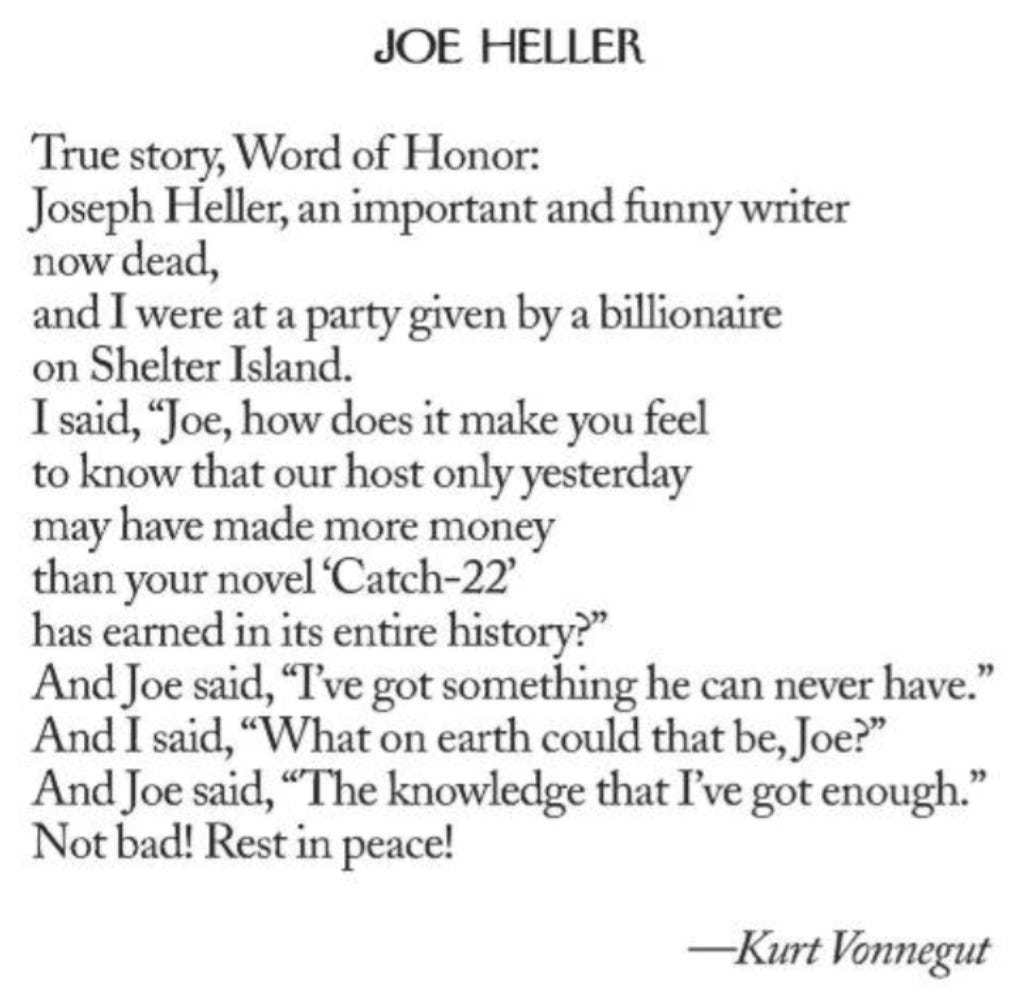
These days, I feel a palpable sense of abundance, and I never worry about money, even though I’m earning about 50% less than when I lived on Venice Beach, without even accounting for inflation. It feels like I have 10x more, because I now require so little, so my ‘margins’ are much bigger.
Plus, without the need to juggle three jobs in order to afford my so-called necessities, I have more opportunity to enjoy the depth of life instead of always worrying about its speed—the slow mornings, the quality time with friends and family, the home-cooked meals, and all of the other things those on their deathbeds most commonly regret not doing more of.
I have more time to cook my own meals, saving me $1200/month on dining out.
I experienced a near complete resolution of all my health issues, saving me about $1800/month on alternative healers.
I quit weed entirely, saving me $400/month plus associated costs of fancy munchies.
I feel content wherever I am and travel much less compulsively, saving me probably $1300/month.
I surrendered the need for perfect hair and shaved my head, saving me $220/month in haircuts.
I find joy in cleaning my own living space, saving me $150/month.
I rarely buy new clothes, feeling comfortable in my own skin.
I even lived in a literal tiny home for a few months this past winter and loved it.
Spirituality & Materialism
As for spirituality and materialism, there is no conflict between the two. I still enjoy luxurious accommodations, organic food (which is sadly a luxury in the US!), fancy grooming products, etc. The difference now is that I consciously choose when to enjoy those things, as a treat, rather than depending on them for my ongoing equanimity—and I’d be fine without any of them. I’m in control now, and instead of having my life organized by my cost of living, I’m able to design an experience for myself that feels sustainable, meaningful and rewarding.
Over the last 11 years, I would estimate that learning this one technique has saved me tens of thousands of dollars in unspent money on temporary distractions from the unending sense of doom created by a lifetime of unmitigated stress accumulation.
Let’s discuss these and other ideas during Collective Effervescence, our online group meditation series, this Sunday March 8 at 12PM ET. Drop in for meditation only (first 30 min) or stay for discussion + Q&A on this and other life topics from the Vedic perspective. Join the WhatsApp group to receive reminders 24 hours before each session, or click Subscribe on this page to have all upcoming dates automatically sync to your preferred calendar.